
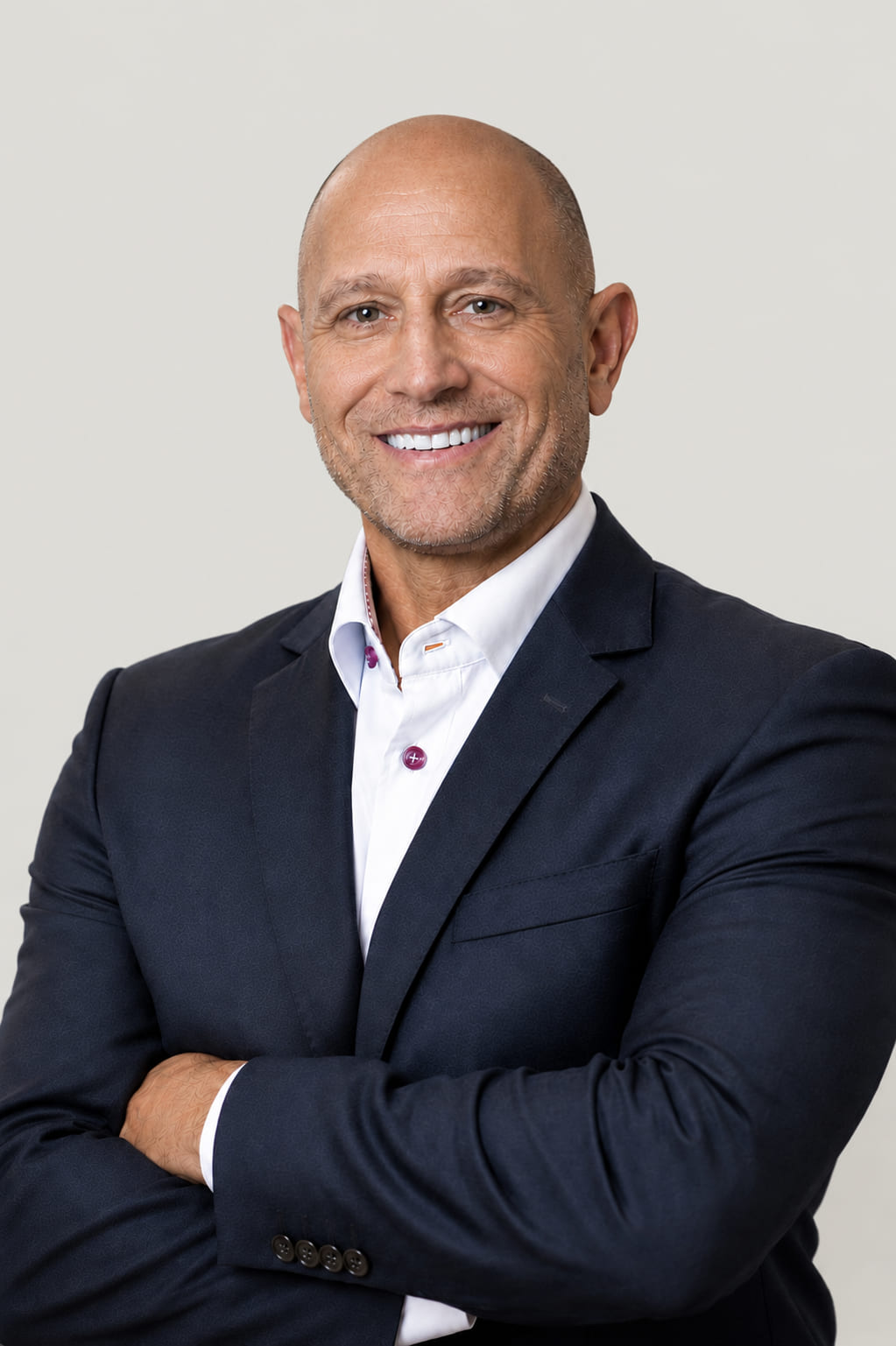
Jay Kiss is the co-founder of the Canadian Spine Institute and a clinician specializing in spine health, human movement, and performance. For more than three decades, he has dedicated his career to helping individuals with complex spinal and musculoskeletal conditions through an integrated approach that combines advanced biomechanics, neuromuscular rehabilitation, soft tissue management, movement science, and strength and conditioning.
Over the course of his career, Jay has developed his own clinical model of rehabilitation, built upon decades of experience, continuous professional education, and work with thousands of patients ranging from elite athletes to individuals living with persistent pain.
Rather than following a single treatment philosophy, his approach is guided by clinical reasoning and a patient-specific triage process that identifies the primary factors limiting recovery before selecting the most appropriate combination of therapeutic interventions.
Dynamic Neuromuscular Stabilization (DNS) from the Prague School of Rehabilitation serves as the principal framework within Jay's clinical approach. DNS provides the foundation for assessing breathing, postural control, spinal stabilization, joint centration, neuromuscular coordination, and movement quality. Depending on the patient's presentation, these principles are integrated with advanced applied biomechanics, manual osteopathic therapy, posturology, soft tissue management, movement retraining, progressive strength and conditioning, and other evidence-informed rehabilitation strategies.
Jay was the first practitioner to introduce Active Release Techniques® to Quebec, and his extensive experience in soft tissue management continues to play an important role in his clinical practice. Rather than viewing manual therapy as a standalone treatment, he uses it to improve tissue function and create opportunities for more efficient movement, which are then reinforced through individualized rehabilitation and patient education.
Known for managing complex and persistent cases, Jay frequently works with patients who have not achieved lasting success through conventional treatment alone. His practice emphasizes comprehensive assessment, precise clinical reasoning, movement analysis, hands-on care, education, and progressive rehabilitation to help patients restore function, improve movement efficiency, and build long-term physical resilience.
Throughout his career, Jay has trained and rehabilitated athletes competing at the highest levels of professional and international sport, including the NHL, NFL, CFL, PGA Tour, MMA, track and field, figure skating, mogul skiing, short-track speed skating, soccer, swimming, dragon boat racing, and kayaking. This experience has reinforced his belief that the same principles of movement quality, tissue health, and progressive adaptation apply equally to elite performers and everyday patients.
In addition to his clinical practice, Jay has contributed to the evaluation and clinical integration of emerging rehabilitation technologies designed to support tissue health, neuromuscular function, and recovery. His interest in innovation is grounded in careful clinical observation, sound biomechanics, and an ongoing commitment to evidence-informed practice.
At the core of Jay's philosophy is the belief that successful rehabilitation cannot be built around a single technique or profession. Every patient presents with a unique combination of mechanical, neuromuscular, soft tissue, and functional factors. His role is to identify the primary barriers to recovery and develop an individualized strategy that restores efficient movement, enhances resilience, and helps each patient return to the activities that matter most.
His guiding principle is simple: the method should always serve the patient—not the other way around.