
The Spine: Anatomy, Function and Common Conditions

Author
Dr. Jeff D. Golan
Spine Surgeon, Co-Founder
Published
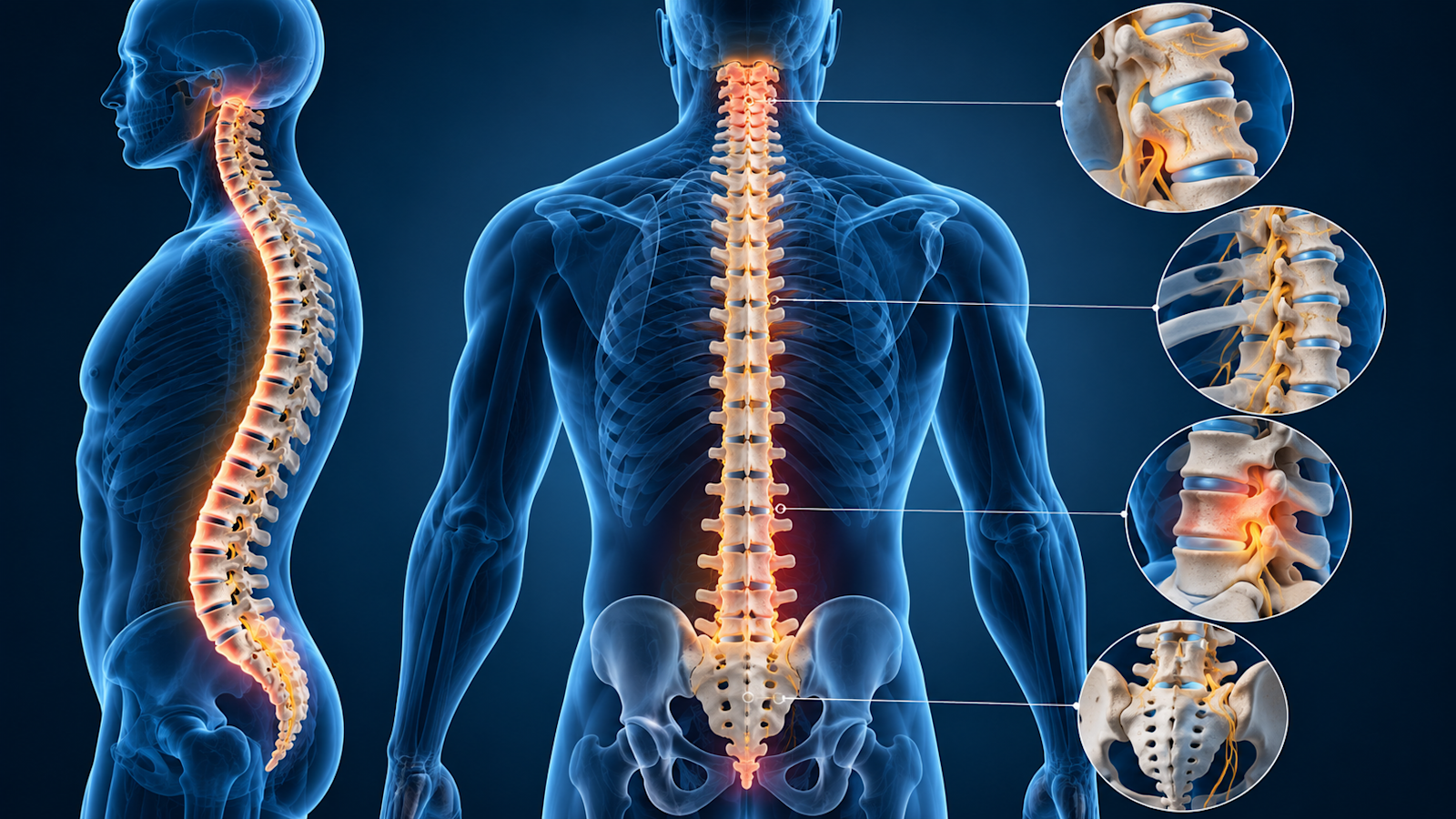
The spine is one of the most important structures in the human body. It supports the head and upper body, protects the spinal cord, and allows the body to bend, rotate, and move.
Spinal problems can affect people of all ages. Some conditions cause mild discomfort, while others may lead to significant pain, weakness, or limited mobility. Understanding the spine can help patients recognize symptoms and know when to seek medical attention.
What Is the Spine?
The spine, also called the vertebral column, is a series of small bones called vertebrae. These bones are stacked on top of one another from the neck to the lower back.
Between most vertebrae are intervertebral discs. These flexible structures act as cushions and help absorb shock during everyday activities such as walking, running, and lifting.
The spine also surrounds and protects the spinal cord, an essential part of the nervous system that connects the brain with the rest of the body.
The Five Regions of the Spine
The spine is divided into five main regions:
Cervical Spine
The cervical spine is located in the neck. It contains seven vertebrae, known as C1 through C7.
This region supports the head and allows movements such as turning and tilting the neck.
Thoracic Spine
The thoracic spine is located in the upper and middle back. It contains twelve vertebrae, known as T1 through T12.
The ribs attach to many of these vertebrae, helping form the structure of the chest.
Lumbar Spine
The lumbar spine is located in the lower back. It contains five large vertebrae, known as L1 through L5.
Because it supports much of the body's weight, the lumbar spine is particularly vulnerable to mechanical stress and certain types of injury.
Sacral Spine
The sacrum is a triangular bone located below the lumbar spine. It connects the spine with the pelvis and helps transfer weight from the upper body to the legs.
Coccyx
The coccyx, commonly known as the tailbone, is located at the very bottom of the spine. It consists of several small fused bones.
What Does the Spine Do?
The spine has several essential functions.
Support: The spine provides structural support for the head, neck, and torso.
Protection: The vertebrae form a protective canal around the spinal cord.
Movement: The spine allows the body to bend, twist, and maintain different positions.
Shock absorption: Intervertebral discs help absorb forces generated by everyday movements.
Nerve function: Nerves branch from the spinal cord through openings between the vertebrae and travel to different parts of the body.
Common Spine Conditions
Several conditions can affect the spine.
Herniated Disc
A herniated disc occurs when part of an intervertebral disc moves beyond its normal position. In some cases, the displaced material can irritate nearby nerves.
Symptoms may include back or neck pain, numbness, tingling, or weakness.
Spinal Stenosis
Spinal stenosis occurs when the spaces around the spinal cord or nerves become narrower.
It most commonly affects the lower back or neck. Symptoms can include pain, numbness, weakness, or difficulty walking.
Degenerative Disc Disease
Intervertebral discs can gradually change with age. They may lose some of their flexibility and ability to absorb shock.
Some people experience pain or stiffness, while others may have disc degeneration without significant symptoms.
Scoliosis
Scoliosis is an abnormal sideways curvature of the spine. It can develop during childhood or adolescence, although it can also occur later in life.
The severity and treatment of scoliosis depend on several factors, including the degree of curvature and the patient's age.
Spinal Fractures
A spinal fracture can result from trauma, falls, sports injuries, or weakened bones.
Some fractures require immediate medical evaluation, particularly when neurological symptoms are present.
When Should You See a Spine Specialist?
Not every episode of back or neck pain requires specialist treatment. However, persistent, severe, or worsening symptoms should be evaluated by a healthcare professional.
You should seek medical attention if you experience symptoms such as:
Persistent back or neck pain
Pain spreading into an arm or leg
Numbness or tingling
Muscle weakness
Difficulty walking or maintaining balance
Symptoms following a significant injury
Sudden changes in bladder or bowel control
Some of these symptoms can indicate a more serious spinal or neurological problem and require prompt medical assessment.
How Are Spine Problems Diagnosed?
A healthcare professional may begin with a medical history and physical examination.
Depending on the symptoms, additional tests may be recommended. These can include:
X-rays
Magnetic resonance imaging (MRI)
Computed tomography (CT)
Nerve conduction studies
Electromyography (EMG)
The appropriate tests depend on the patient's symptoms and suspected condition.
Treatment Options for Spine Conditions
Treatment depends on the specific diagnosis, symptoms, and overall health of the patient.
Non-surgical treatments may include physical therapy, activity modification, medication, and targeted injections.
Some conditions may require surgery when conservative treatments do not provide sufficient relief or when there is significant nerve or spinal cord compression.
A specialist can evaluate the condition and discuss the most appropriate treatment options.
Maintaining a Healthy Spine
Several habits can help support spinal health.
Regular physical activity can help maintain strength and mobility. Maintaining good posture and using appropriate lifting techniques can also reduce unnecessary stress on the back.
A healthy body weight may reduce mechanical stress on the spine. Regular movement is also preferable to remaining in the same position for prolonged periods.
Take the Next Step for Your Spine Health
Persistent back or neck symptoms deserve proper evaluation. A qualified specialist can assess your symptoms, identify the underlying cause, and discuss appropriate treatment options.
Frequently asked questions
What are the main regions of the spine?
The spine has five main regions: the cervical spine in the neck, the thoracic spine in the upper and middle back, the lumbar spine in the lower back, the sacral spine, and the coccyx.
What are the most common spine conditions?
Common spine conditions include herniated discs, spinal stenosis, degenerative disc disease, scoliosis, and spinal fractures. Symptoms and treatment options vary depending on the specific condition.
When should I see a spine specialist?
Consider seeing a spine specialist if you have persistent or severe back or neck pain, numbness, tingling, muscle weakness, difficulty walking, or symptoms that worsen over time. A specialist can evaluate your symptoms and recommend appropriate treatment.